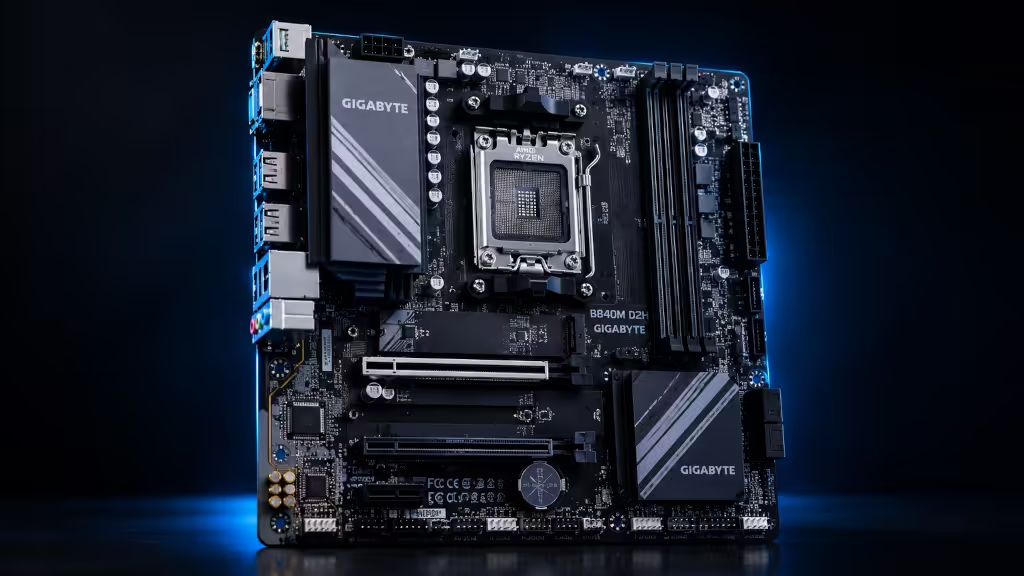
The GIGABYTE B840M D2H is a micro-ATX motherboard designed as the most affordable gateway to the AM5 platform for mainstream users. It replaces the A620 chipset, offering improved connectivity with 2.5 GbE LAN and an additional M.2 slot, while supporting the latest AMD Ryzen 7000, 8000, and 9000 series processors. This review provides a complete analysis of its specifications, performance, key features, and market positioning.
This article presents a comprehensive analysis of the GIGABYTE B840M D2H motherboard. Based on official specifications from GIGABYTE, retailer product pages, user reviews, and benchmark data, it covers the board's technical details, performance metrics, key features, known issues, and market positioning. The goal is to provide a complete reference for anyone considering this motherboard for a new or updated system.
Core Specifications and Design
The GIGABYTE B840M D2H is a micro-ATX motherboard built for the AMD AM5 socket. It is designed to be the entry point to the platform for mainstream users, using the newer AMD B840 chipset, which offers a feature set that is more substantial than the A620 chipset. The board measures 244mm x 244mm, fitting a standard micro-ATX form factor.[citation:4]
| Feature | Specification |
|---|---|
| Socket | AMD AM5 |
| CPU Support | AMD Ryzen 9000 / 8000 / 7000 Series |
| Chipset | AMD B840 |
| Form Factor | Micro-ATX (244mm x 244mm) |
| Memory | 2 x DDR5 DIMM slots, up to 128GB, 7600 MHz (OC) |
| VRM | 5+2+2 Phase Digital VRM with 60A DrMOS |
| Expansion Slots | 1 x PCIe 4.0 x16, 1 x PCIe 3.0 x4 (x16 slot) |
| Storage | 1 x PCIe 4.0 x4 M.2, 1 x PCIe 3.0 x2 M.2, 4 x SATA III |
| Audio | Realtek ALC897 7.1 channel HD Audio |
| Ethernet | Realtek 2.5 GbE LAN |
| USB Ports (Rear) | 4 x USB 2.0, 2 x USB 3.2 Gen 1 |
| Video Outputs | 1 x HDMI 2.1, 1 x DisplayPort 1.4 |
| BIOS | UEFI AMI with HyperTune AI Optimization |
Key Features and Differentiators
The B840M D2H introduces several significant upgrades over the previous entry-level A620 boards, making it a more compelling option for budget builders.
B840 Chipset Improvements: The B840 chipset provides a more robust set of connectivity options. It offers more PCIe lanes for expansion, supports faster networking standards, and enables additional USB ports, making it a more versatile foundation for a modern system.
2.5 GbE LAN: A standout feature is the inclusion of a Realtek 2.5 GbE LAN chip, which provides high-speed wired networking. This is a significant upgrade over the 1 GbE port found on A620 boards and is valuable for fast local network transfers and gaming.
Enhanced M.2 Storage: Unlike the single M.2 slot on some A620 boards, the B840M D2H includes two M.2 slots. One slot (M2A_CPU) runs at PCIe 4.0 x4 for a primary, high-speed drive, while the other (M2C_SB) runs at PCIe 3.0 x2 for additional storage.
Dual Video Outputs: The board features both HDMI 2.1 and DisplayPort 1.4 outputs. DisplayPort is a welcome addition, offering support for 4K at 144Hz, which is essential for high-refresh-rate productivity setups.
HyperTune BIOS: GIGABYTE introduces an AI-driven BIOS optimization technology with the 800-series boards. This feature uses AI to adapt signal strength and memory timings, claiming to enhance system efficiency and performance.
Real-World Performance
The GIGABYTE B840M D2H is positioned as a capable foundation for mainstream systems, and available benchmark data and user reports confirm its functionality.
Benchmark Results: In a Nero Score benchmark, a system using the B840M D2H motherboard, a Ryzen 7 7800X3D, and an RTX 5070 Ti achieved a total score of 12,867. The CPU score was 3,852, and the GPU score was 12,907, indicating the board can deliver the expected performance of the components without being a bottleneck.
User Feedback: Reviews from users on major electronics retail sites highlight several key observations:
- Positive: Many users report that the board works well in its intended role, with one user noting that a Ryzen 7 8700G system runs well with this board.
- Negative: Several critical reviews report that the board failed within a short period (as little as a few days to three weeks) after purchase. One user described a system that powered down during a game and would not turn on again.
While the positive feedback indicates the board functions for many users, the reports of early failures are a significant concern and indicate potential issues with build quality or component reliability.
Market Positioning and Pricing
The GIGABYTE B840M D2H is an entry-level board with a very affordable price point, making it a strong candidate for budget builds.
| Region | Approx. Price (Local Currency) | Price (USD Equivalent) |
|---|---|---|
| Kuwait | 36.85 KWD | ~$120 USD |
| Russia | 9,886 ₽ | ~$110 USD |
Competitive Comparison: B840 vs A620
The B840M D2H represents a clear step up from entry-level A620 boards like the GIGABYTE A620M H. While they share the same socket and basic memory support, the B840 chipset offers several key advantages that justify the potential price difference.
| Feature | GIGABYTE A620M H | GIGABYTE B840M D2H |
|---|---|---|
| Chipset | AMD A620 | AMD B840 |
| LAN Speed | 1 GbE | 2.5 GbE |
| M.2 Slots | 1 x PCIe 4.0 | 2 x (1x PCIe 4.0, 1x PCIe 3.0) |
| Video Outputs | HDMI, DisplayPort | HDMI 2.1, DisplayPort 1.4 |
| BIOS Features | Standard | HyperTune AI |
Conclusion
The GIGABYTE B840M D2H is a competent entry-level AM5 motherboard that offers a solid set of features for its price point. The inclusion of 2.5 GbE LAN, an extra M.2 slot, and dual video outputs makes it a more modern and capable foundation than older A620 boards. The VRM design is sufficient for mainstream processors, and support for high-speed DDR5 memory and PCIe 4.0 storage ensures good performance for modern builds.
However, the reports of early failures in user reviews are a significant concern and suggest a risk of premature failure. While many users report that the board works well, the pattern of failures indicates potential quality control issues. For users willing to take the risk, it offers good value, but for those prioritizing reliability, a more premium board with a proven track record may be a better investment.
 Lorraine Hayes
Cloud Architect / Content Designer
eBits Tech Platform
@ eBits.icu