Imagine a computer so small that it can fit on the tip of your finger, yet powerful enough to connect to the internet. That´s the ESP32 microcontroller. In the past, building a smart device required many expensive parts and complex wiring. Today, this single, affordable chip changes everything. It acts as an electronic brain that can receive information from the world and send it directly to you.
Because of this little chip, we now have smart refrigerators that tell us when the milk is expired, automated plant waterers, and security systems we can check from anywhere. For anyone starting in technology, learning how this tiny brain works is the perfect first step to building your own inventions. It is simple, fun, and opens the door to creating the future with your own hands.
**ESP32: Comprehensive Overview**
**Introduction**

The ESP32 is a powerful, low-cost, and versatile microcontroller developed by Espressif Systems. It is widely used in IoT projects, embedded systems, and smart devices due to its rich features, wireless capabilities, and ease of programming.
**Capabilities and Applications**
- **Wireless Connectivity:** Dual-mode Wi-Fi (802.11 b/g/n) and Bluetooth (Classic and BLE)
- **IoT Projects:** Home automation, smart sensors, wearables, remote control devices
- **Sensor Integration:** Supports numerous sensors via GPIO, ADC, DAC, I2C, SPI, UART
- **Audio Processing:** Capable of handling audio input/output, voice recognition
- **Camera Support:** Compatible with camera modules for image processing
- **Real-Time Operations:** Supports real-time applications with RTOS support
- **Security:** Built-in encryption, secure boot, flash encryption
- **Power Management:** Deep sleep modes for battery-powered applications
- **Custom Firmware:** Can run custom firmware or use frameworks like Arduino, ESP-IDF, MicroPython, and CircuitPython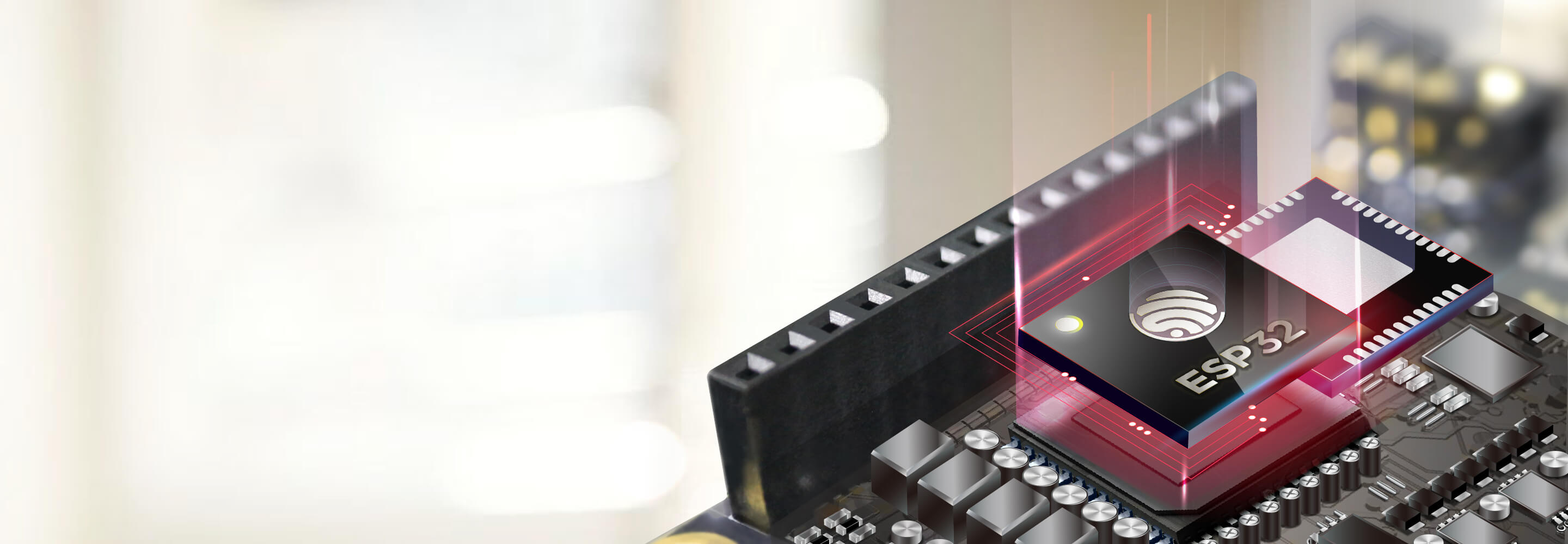
**Technical Features**
- **Processor:** Dual-core Tensilica LX6 microprocessor, up to 240 MHz
- **Memory:**
- SRAM: 520 KB
- Flash: Up to 16 MB external flash (depending on module)
- PSRAM: Optional, up to 8 MB
- **Wireless:**
- Wi-Fi: 2.4 GHz 802.11 b/g/n
- Bluetooth: v4.2 BR/EDR and BLE
- **Interfaces:**
- GPIO pins: Up to 34
- ADC: 12-bit, up to 18 channels
- DAC: 8-bit, 2 channels
- UART: 3 ports
- SPI: 4 buses
- I2C: 2 buses
- PWM: 16 channels
- I2S: For audio applications
- Ethernet: via external PHY (with additional components)
- **Other Features:**
- Ultra-low power sleep modes
- Secure boot and flash encryption
- Hardware encryption (AES, SHA-2, RSA, ECC)
- RTC (Real-Time Clock)
- Hall sensor and temperature sensor
**Programming Requirements**
- **Development Environment:**
- **ESP-IDF:** Official Espressif IoT Development Framework (recommended for advanced features)
- **Arduino Core for ESP32:** Easier for beginners; uses Arduino IDE
- **MicroPython:** Lightweight Python implementation for scripting
- **CircuitPython:** Alternative to MicroPython, beginner-friendly
- **Hardware Needed:**
- ESP32 development board (e.g., ESP32 DevKit v1)
- USB cable for power and programming
- Computer with USB port
- Optional peripherals (sensors, displays, motors)
- **Drivers and Software:**
- USB to UART drivers (if necessary)
- IDEs: Arduino IDE, Visual Studio Code, PlatformIO
- Flashing tools: esptool.py, ESP-IDF tools
**Steps to Program the ESP32**
1. **Set Up Development Environment:** Install Arduino IDE or ESP-IDF
2. **Connect the ESP32 to the Computer:** Via USB
3. **Select the Correct Board and Port:** In the IDE
4. **Write or Load Your Code:** Using the appropriate SDK or libraries
5. **Compile and Upload:** Flash the firmware onto the device
6. **Monitor Serial Output:** For debugging and interaction
**Summary**
The ESP32 is an incredibly versatile microcontroller that combines powerful processing, extensive connectivity options, and numerous interfaces, making it ideal for a vast array of projects. Its support for various programming environments and rich feature set allows both beginners and advanced developers to create innovative solutions efficiently.
The ESP32 microcontroller has quietly become the connective tissue of the modern Internet of Things, powering everything from smart water meters in Morocco to AI-enabled industrial sensors. With over 1.7 billion chips shipped and a dominant 60% share of maker microcontroller choices in 2026, it has reshaped how engineers and hobbyists approach connected devices. This comprehensive review examines the technology, the ecosystem, and the real-world impact of the ESP32 in 2026.
This article provides a complete analysis of the ESP32 microcontroller and its impact on the IoT and edge computing landscape in 2026. It covers the evolution of the ESP32 family from the original chip to the latest ESP32-S31, the technical architecture that enables its versatility, the developer ecosystem that fuels its adoption, and the real-world applications that demonstrate its transformative potential. The goal is to offer a definitive reference for engineers, developers, and technology professionals seeking to understand why the ESP32 has become the defining platform of the connected era.
The ESP32 Phenomenon: From Niche Chip to Industry Standard
When Espressif Systems released the original ESP32 in 2016, few could have predicted the scale of its impact. The chip offered something unprecedented: integrated Wi-Fi and Bluetooth connectivity, dual-core processing, and a price point that made connected devices accessible to everyone from Fortune 500 companies to hobbyists working in their garages. By 2025, Espressif had shipped 178 million chips and 131 million modules, representing year-over-year growth of 19% and 26% respectively [citation:2].
But the numbers only tell part of the story. A comprehensive analysis of 662 original maker projects conducted between March and May 2026 revealed that the ESP32 family accounted for 59.8% of all microcontroller choices, with the next closest competitor at just 0.6% [citation:8]. In IoT-focused categories, the dominance was even more pronounced: 81% in home automation, 87% in wearables, and 73% in environmental monitoring [citation:8]. The ESP32 has not just won the market; it has become the de facto standard for connected devices.
The Technical Foundation: Why the ESP32 Works
The ESP32's success is rooted in a design philosophy that prioritizes integration without sacrificing flexibility. The original chip packed a dual-core Xtensa LX6 processor, Wi-Fi, Bluetooth Classic and BLE, and a comprehensive set of peripherals into a single die. Subsequent generations have refined and expanded this formula, creating a family of chips that addresses virtually every segment of the IoT market.
The ESP32-S3, introduced as a flagship for AIoT applications, added vector instructions to the MCU for neural network acceleration and signal processing. It features a dual-core Xtensa LX7 processor running at up to 240 MHz, 512 KB of SRAM, and support for external flash and PSRAM through Octal SPI interfaces [citation:10]. The module variants, such as the ESP32-S3-WROOM-2, offer up to 32 MB of flash and 16 MB of PSRAM, making them suitable for memory-intensive workloads like wake word detection, speech recognition, and face detection [citation:10].
The most recent addition to the family, the ESP32-S31 announced in March 2026, represents a significant architectural shift. It uses a dual-core 32-bit RISC-V microcontroller running at 320 MHz, with one core featuring a wide 128-bit data path with SIMD instructions for fast parallel processing [citation:11]. The SoC integrates Wi-Fi 6, Bluetooth 5.4 with LE Audio, IEEE 802.15.4 for Thread and Zigbee, and a 1000 Mbps Ethernet MAC, making it a comprehensive connectivity hub for industrial and consumer applications [citation:11].
| Feature | ESP32 (Original) | ESP32-S3 | ESP32-S31 |
|---|---|---|---|
| CPU | Dual Xtensa LX6 @ 240 MHz | Dual Xtensa LX7 @ 240 MHz | Dual RISC-V @ 320 MHz |
| Wireless | Wi-Fi 4 + BT 4.2/BLE | Wi-Fi 4 + BT 5 (LE) | Wi-Fi 6 + BT 5.4 + 802.15.4 |
| AI Acceleration | No | Vector instructions | SIMD + TEE |
| Memory | 520 KB SRAM | 512 KB SRAM + PSRAM support | 512 KB SRAM + DDR PSRAM |
| Ethernet | External MAC | No | 1000 Mbps integrated |
| Security | Secure boot, flash encryption | RSA, AES-XTS, HMAC | PUF, TEE, side-channel protection |
The Ecosystem: Where the ESP32 Truly Wins
The ESP32's most significant advantage is not its silicon; it is the ecosystem that has grown around it. Espressif operates on a "Business-to-Developer-to-Business" model, treating developers as the primary customer. This strategy has created a self-reinforcing cycle where developers who learn on ESP32 platforms during prototyping are more likely to use them in commercial products.
M5Stack, a development kit brand acquired by Espressif in 2024, exemplifies this approach. At embedded world 2026, M5Stack demonstrated a modular ecosystem with approximately 400 SKUs, including more than 200 sensor modules, and a "Friday Release" cadence that keeps developers engaged [citation:6]. The company's stackable 5x5 cm form factor, combined with LoRa modules, industrial control panels, and AI accelerators, shows how the ESP32 has evolved from a prototyping tool into a platform for production-grade embedded systems [citation:6].
The open-source community around the ESP32 has also played a pivotal role. The Arduino-ESP32 core, ESP-IDF, and ESP-Matter frameworks provide developers with multiple entry points, from high-level Arduino-style programming to low-level hardware access [citation:5]. This flexibility ensures that the ESP32 appeals to beginners and experts alike.
Edge AI: The ESP32's Next Frontier
One of the most transformative developments in 2026 is the emergence of AI capabilities on ESP32-class hardware. The ESP-Claw framework, released by Espressif, enables ESP32-S3, ESP32-P4, and ESP32-C5 devices to function as local AI agents. It combines an ESP-IDF application with a Lua runtime, an event router, and the ability to connect to external LLMs through the Model Context Protocol (MCP) [citation:1].
The architecture is pragmatic rather than magical. The framework does not attempt to run a full language model on a microcontroller. Instead, it uses external LLMs for flexible interpretation and reasoning, then saves confirmed behaviors as local Lua scripts that run deterministically on the device [citation:1]. This approach means that time-critical actions remain local, while complex reasoning can be offloaded to the cloud when needed.
The supported chips for ESP-Claw include the ESP32-S3, which features vector instructions for neural network acceleration, and the ESP32-P4, a 400 MHz dual-core RISC-V processor with AI extensions [citation:1][citation:5]. A minimum of 8 MB of flash and 8 MB of PSRAM is required, reflecting the memory demands of running an agent runtime on embedded hardware [citation:1].
Real-world applications of edge AI on ESP32 are already emerging. A study published in April 2026 demonstrated a Moroccan water meter reading system using ESP32-S3 nodes with OV2640 cameras and a Convolutional Neural Network for digit recognition. The system achieved 98.70% accuracy while reducing power consumption by 99.2% compared to Raspberry Pi-based implementations, extending battery life from 46 hours to over 150 days [citation:4].
Real-World Impact: Applications That Matter
The ESP32's versatility is best understood through the applications it enables. Academic and industrial research in 2026 has demonstrated its capabilities across diverse domains.
Environmental Monitoring: An IEEE paper published in January 2026 described a dual IoT solution for flood risk assessment and air quality monitoring. The system used ESP32 microcontrollers with water level, rain, temperature, and humidity sensors, combined with TensorFlow Lite models for real-time risk estimation. Air quality monitoring tracked PM2.5, VOCs, and other pollutants with AI-based predictive analytics [citation:9]. The research emphasized that edge AI allows for cheaper environmental surveillance solutions usable in remote areas with weak digital infrastructure [citation:9].
Electric Vehicle Infrastructure: A wireless sensor network for battery swapping stations used ESP32 microcontrollers to monitor voltage, current, and temperature in real-time. The system achieved measurement accuracy exceeding 92% compared to calibrated instruments, with end-to-end latency under 300 milliseconds [citation:14]. This demonstrates the ESP32's suitability for industrial-grade monitoring applications.
Industrial and Maker Projects: The Make-It analysis of 662 projects revealed that the ESP32 dominates in virtually every category. In AI, Vision, and ML projects, the ESP32 family held a 69% share, with Raspberry Pi at 31% [citation:8]. In audio and music projects, the ESP32 held 54%, reflecting its use in Bluetooth speakers, voice assistants, and audio processing applications [citation:8].
The Market Trajectory
The market for ESP32 modules is positioned for sustained growth. Verified Market Reports projects a compound annual growth rate of approximately 15% over the next decade, driven by the expanding adoption of IoT in smart cities, industrial automation, and autonomous systems [citation:7]. The demand for low-power, high-performance modules capable of supporting AI and machine learning workloads is expected to be a key growth driver as edge computing becomes mainstream [citation:7].
The ESP32-C series, which includes the ESP32-C6 with Wi-Fi 6 and Thread/Zigbee support, represented the largest share of the market at approximately 60% in 2023 [citation:13]. The ESP32-S series, with its AI acceleration capabilities, is expected to grow at the fastest rate during the forecast period due to increasing adoption in industrial applications [citation:13].
Regionally, Asia Pacific leads in revenue contribution at 40%, followed by North America at 30% and Europe at 15% [citation:13]. The region is also the fastest-growing, driven by strong demand from China, India, and Japan [citation:13].
Challenges and Considerations
Despite its success, the ESP32 ecosystem faces challenges. Supply chain disruptions, particularly in semiconductor manufacturing, pose risks to consistent module availability [citation:7]. Pricing pressures from commoditization threaten profit margins, while adoption barriers such as integration complexity and security concerns hinder rapid deployment in certain verticals [citation:7].
Security remains a critical consideration for IoT deployments. The ESP32-S31 addresses this with hardware-based protection including RAM-based Physically Unclonable Functions (PUF), secure boot, flash and PSRAM encryption, and a Trusted Execution Environment with Access Permission Management [citation:11]. These features are increasingly important as IoT devices proliferate in sensitive applications.
Conclusion: The Connective Tissue of the Connected World
The ESP32 microcontroller has become more than a product; it has become infrastructure. It is the chip that powers the sensors in smart cities, the controllers in industrial automation, the brains of consumer gadgets, and the experiments of countless makers and students. Its combination of affordability, capability, and ecosystem support has made it the default choice for connected devices, a position that no competitor has come close to challenging.
In 2026, the ESP32 is evolving from a connectivity chip into an edge intelligence platform. The ESP32-S31 brings Wi-Fi 6, Bluetooth 5.4, Thread, Zigbee, and gigabit Ethernet into a single RISC-V SoC. The ESP-Claw framework enables local AI agents on microcontroller hardware. The M5Stack ecosystem provides modular hardware for prototyping and production. Together, these developments ensure that the ESP32 will remain at the center of the IoT and edge computing revolution for years to come.
For engineers, developers, and technology professionals, understanding the ESP32 is no longer optional. It is the platform on which the connected world is being built, one microcontroller at a time.
 Lorraine Hayes
Cloud Architect / Content Designer
eBits Tech Platform
@ eBits.icu