
Taiwan Semiconductor Manufacturing Company (TSMC) is the world's largest and most advanced dedicated semiconductor foundry. Founded in 1987, the company pioneered the "pure-play" foundry model: manufacturing chips exclusively for other companies rather than designing and selling its own products. Today, TSMC is the essential manufacturer for the world's leading technology firms, including Apple, Nvidia, AMD, Broadcom, and Qualcomm.
The company is headquartered in Hsinchu, Taiwan. Its American Depositary Receipts (ADRs) trade on the New York Stock Exchange under the ticker symbol TSM, with a market capitalization exceeding $2.17 trillion.
What Does TSMC Produce?
TSMC manufactures a vast portfolio of semiconductor chips, ranging from mature nodes to the world's most advanced technologies. The company's product diversity is staggering: in 2025, it produced more than 12,680 different products using 305 distinct process technologies.
Advanced Logic Nodes
TSMC is the undisputed leader in cutting-edge semiconductor manufacturing, with production across its leading nodes:
| Process Node | Revenue Share (Q2 2026) | Key Applications |
|---|---|---|
| 5nm | 33% | Flagship smartphones, AI GPUs (Nvidia Blackwell) |
| 3nm | 30% | High-performance computing, next-gen AI accelerators |
| 7nm | 11% | Legacy AI chips, networking, automotive |
| 2nm | 3% (rapidly growing) | Emerging flagship products (Apple A20, AMD MI450, Nvidia Rubin Ultra) |
Advanced process technologies of 7nm and below accounted for 77% of total wafer revenue in Q2 2026, demonstrating the company's strategic focus on leading-edge manufacturing.

Advanced Packaging: CoWoS and Beyond
TSMC's proprietary CoWoS (Chip-on-Wafer-on-Substrate) packaging technology is arguably as critical as its wafer fabrication. CoWoS stacks GPU dies directly with High Bandwidth Memory (HBM), a requirement for the most advanced AI accelerators. The company is aggressively expanding this capacity, with monthly CoWoS capacity projected to reach:
| Year | Monthly CoWoS Capacity (wafers) |
|---|---|
| End of 2026 | 115,000 |
| End of 2027 | 190,000 |
| End of 2028 | 225,000 |
This capacity expansion is critical, as CoWoS has been a primary bottleneck for AI chip supply. The supply-demand gap is expected to narrow from approximately 20% to about 10% by the end of 2026, with further improvements expected in 2027.
Global Importance: The "Silicon Shield"
TSMC's strategic importance transcends technology; it is a geopolitical and economic linchpin. The company is often described as the "bottleneck of the semiconductor value chain" because nearly every leading chip designer routes advanced-node production through its fabs.
This dominance has created what analysts call a "Silicon Shield" for Taiwan: the international community's reliance on its chips creates a powerful deterrent against geopolitical disruption.
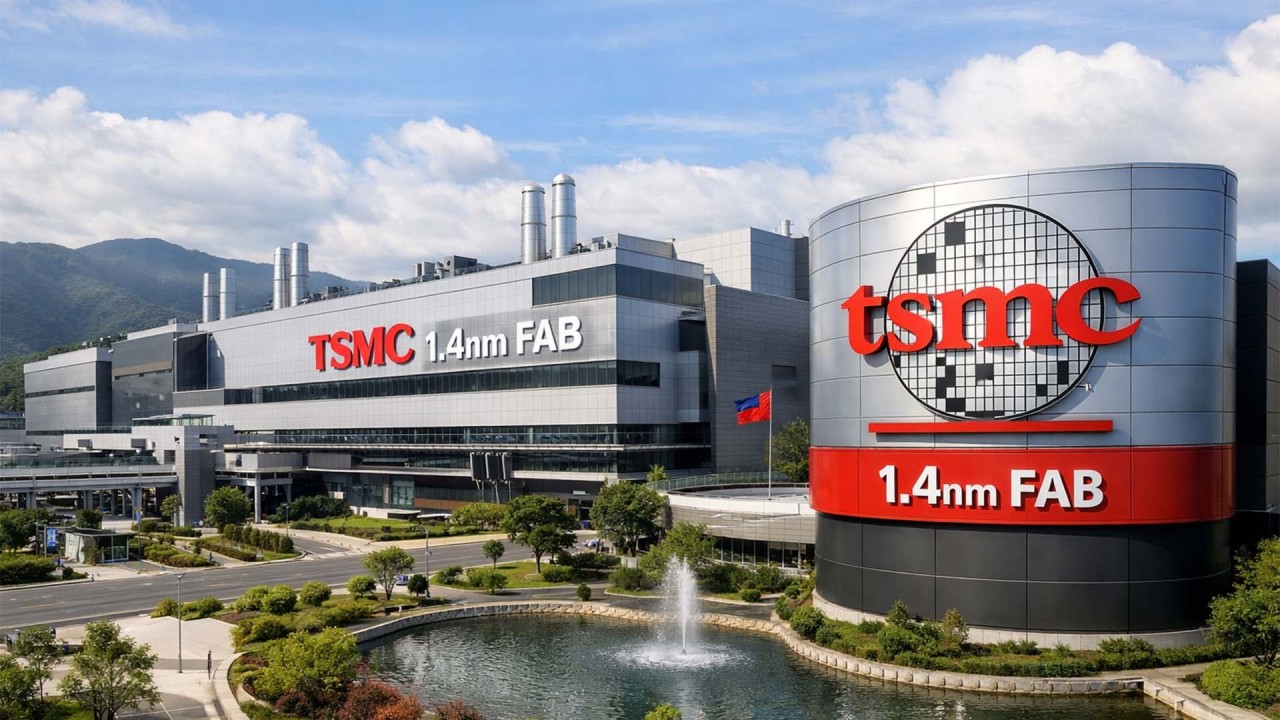
Production Sites
TSMC operates a global network of manufacturing facilities, with aggressive expansion underway, particularly in the United States:
Taiwan (Primary Operations)
United States (Arizona)
TSMC's U.S. expansion is the largest foreign direct investment in American history. The company has committed a total of $265 billion to Arizona, with current and planned projects set to deliver 12 fabrication and advanced packaging facilities plus an R&D centre. The expansion includes:
-
Phase 1 (4nm): Operational, achieving yields "as good as" its flagship Taiwan fabs.
-
Phase 2: Preparing for equipment move-in.
-
Phases 3 and 4: Under construction or in preparatory stages, focused on 2nm mass production and advanced packaging.
Upon completion, approximately 30% of TSMC's 2nm and more advanced capacity will be located in the United States.
Japan (JASM)
China
-
Fabs in Nanjing and Shanghai.
Germany (ESMC)
-
A specialty technology fab (28/22nm and 16/12nm) under construction in Dresden, targeting automotive and industrial applications.

Market Share and Dominance
TSMC's dominance of the global foundry market is unprecedented and accelerating. According to Counterpoint Research, TSMC captured a staggering 73% market share in Q1 2026. TrendForce data corroborates this, placing the company at 72.3% of the pure-play foundry market.
The gap with its closest competitor, Samsung Foundry, has widened to 65.8 percentage points in Q1 2026, from 59.9 percentage points a year earlier. This structural dominance is driven by:
-
Superior process technology and yield rates.
-
The convergence of AI chip orders (Nvidia, AMD, Apple) on TSMC's advanced nodes.
-
Proprietary advanced packaging (CoWoS) capabilities that competitors cannot easily replicate.
Competitors and Challenges
Despite TSMC's overwhelming dominance, competitors are pursuing alternative strategies:
Samsung Foundry (Market Share: ~10%) is the second-largest pure-play foundry. The company was the first to reach market with a 2nm device (Exynos 2600) in Q1 2026 and is aggressively targeting AI customers. However, 2nm wafer costs are estimated to be about 30% higher than 3nm, limiting broader adoption.
Intel Foundry has re-entered the market but remains far behind. TSMC holds approximately 70.4% of global foundry output with a 66.2% gross margin, while Intel's foundry division continues to post net losses. Intel's 18A (1.8nm-class) node has launched, but the company faces a steep climb to close TSMC's lead.
SMIC (China) is expanding aggressively based on domestic demand, adding capacity despite margin pressure. However, it remains far behind in advanced nodes.
Rapidus (Japan) is an emerging challenger, backed by the Japanese government, aiming for 2nm mass production in 2027. However, its commercial viability remains unproven.
Stock Market and Financial Performance
Key Financials (as of August 2026)
-
Stock Price (TSM): ~$418.95
-
Market Capitalization: $2.17 trillion
-
52-Week Range: $225.63 – $479.00
-
YTD Performance: +38.56%
-
1-Year Performance: +86.29%
Analyst Sentiment
Analysts remain strongly bullish, with significant upside projected:
-
Sanford C. Bernstein: $554
-
Bank of America: $590
-
Barclays: $650
Dividends
TSMC has aggressively increased shareholder returns. The 2026 dividend has been raised to TWD 24 per share, a 33% increase from TWD 18 in 2025.
Financial Performance (Q2 2026)
| Metric | Q2 2026 Result | YoY Change |
|---|---|---|
| Net Profit | $21.95 billion | +77.4% |
| Revenue | $40.2 billion | +36% |
| Gross Margin | 65-67% (guidance) | — |
Platform Revenue Dynamics
| Platform | Revenue Share (Q2 2026) | Key Trends |
|---|---|---|
| High-Performance Computing (HPC) | 66% | +20% QoQ (driven by AI) |
| Smartphones | 22% | -4% QoQ (softness) |
| Automotive | 4% | +15% QoQ (strong demand) |
| IoT | 5% | +4% QoQ |
| Data Center Equipment | 3% | +5% QoQ |
Industry Trends and Future Outlook
AI as the Primary Growth Driver
The AI revolution has become TSMC's primary growth engine. CEO C.C. Wei noted that "agentic AI" is leading to a resurgence in the role of CPUs in AI data centers, and "no matter what CPU approach is taken... they are almost all TSMC's customers". The company expects full-year 2026 revenue growth to be "slightly above 40%" year-over-year.
2nm and Beyond
TSMC's 2nm technology (N2) is now in production, with monthly wafer starts approaching 50,000-60,000 in H1 2026 and expected to reach 100,000 wafers per month by year-end. Five 2nm fabs are ramping: two in Hsinchu and three in Kaohsiung.
The company's target for first-year 2nm output is 45% higher than the first-year output of its 3nm node in 2023, with 2nm capacity projected to grow at a compound annual growth rate (CAGR) of 70% from 2026 to 2028.
A14 Technology
TSMC is already developing its A14 technology (the second generation of nanosheet transistors, following N2). A14 is expected to deliver a 10-15% speed improvement at the same power, a 25-30% power improvement at the same speed, and a 20% chip density gain over N2. Pre-production will start in 2027, with volume production scheduled for 2028.
Advanced Packaging Expansion
CoWoS capacity is expanding at a CAGR of more than 80% from 2022 to 2027. The company is also developing CoPoS technology, currently in the engineering stage, with risk production expected in early 2028 and mass production likely in 2029.
Conclusion
TSMC is not just a company; it is an essential pillar of the global technology ecosystem. With 73% market share, unrivaled advanced process technology, a $2.17 trillion valuation, and a $265 billion U.S. commitment, the company's dominance is structural and growing. Its role in powering AI chips from Nvidia, Apple, and AMD makes it the most critical semiconductor company in the world.
The company's financial performance reflects its strategic position: record profits, expanding margins, and growing dividends. As AI demand accelerates and 2nm and A14 technologies ramp up, TSMC is positioned to remain not just indomitable, but increasingly essential to the global economy.
 Claire Jones
Cloud Engineer / Technical Writer
eBits Tech Platform @ ebits.icu